
 AI / Consultancy
What is an AI consultancy for architecture and interior design studios?
In short: An AI consultancy for architecture and interior design studios is a specialist partner that installs artificial intelligence inside a studio's real design process: it diagnoses how the team works, configures tools and workflows around the studio's own language, trains the team on live projects and leaves behind systems the studio owns. It is not a software vendor, not a generic AI course and not an outsourced render service.
The category, defined
Most studios first meet AI through one of three doors: a designer experimenting with an image tool at home, a software supplier adding an “AI” button, or a one-day course that shows tools without touching the studio's projects. None of these changes how the studio works, which is why most first attempts stall.
A design-specific AI consultancy sits in the gap. Its job is not to explain AI but to make it part of the practice: which decisions it should speed up, which it must never touch, what the studio's language is and how to encode it, which workflows are worth building and how the team adopts them without a drop in quality.
The closest analogy is not a software implementation but a chef who runs a kitchen and also teaches other kitchens. The value comes from practice, not from theory.
What it actually delivers
The deliverables should be concrete enough to put in a contract. At FORZ an engagement leaves the studio with:
- A configured AI environment: the tools the studio needs, set up, with access and privacy handled.
- Reusable workflows for recurring tasks such as concept generation, material and atmosphere studies, image iteration on top of the studio's own 3D or plans, and presentation material.
- A knowledge base and a bespoke assistant that has read the studio's references, language and standards.
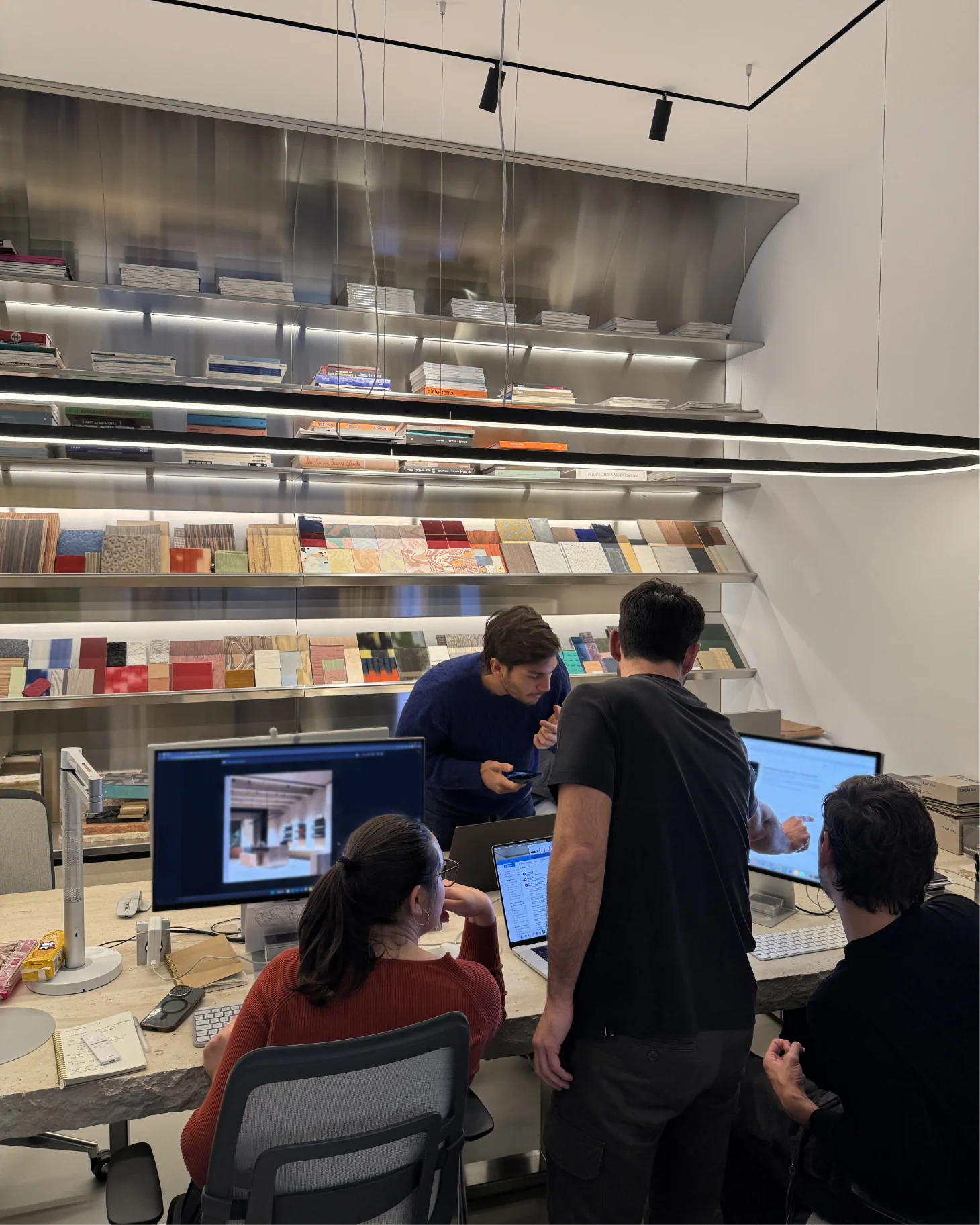
- A trained team, trained on the studio's own live projects rather than on examples.
- Documentation, review criteria and an adoption roadmap, so the method survives when the consultant leaves.
If a proposal does not name what stays in the studio afterwards, it is training, not consultancy.
How the work is structured
A sound engagement moves in phases, and the order matters. First a diagnosis of the studio's projects, workflows and where time actually goes. Then configuration of tools and language. Then installation in the studio and application on live work, which is where adoption really happens. Finally an embedding phase: documentation, standards and a plan for the following months.
The whole first cycle usually takes a few weeks of elapsed time and a small number of intensive on-site sessions with two or three team members, followed by lighter ongoing support.
What it costs, and what drives the price
Prices vary widely because scope does. The variables that move the number are the size of the team, how many workflows are built, whether a bespoke assistant and knowledge base are included, whether talent search is part of the brief, and how long follow-up support runs. A good consultancy will price against a diagnosis rather than a menu, and will be able to explain which variables can change to fit a budget.
A useful test is whether the fee can be recovered through time saved in concept and production. If a consultant cannot show how, the scope is wrong.
How to choose one
Do they come from design practice? Someone who has run projects knows which hours are worth saving and which decisions must stay human.
Do they work on your projects or on examples? Live work is the only training that sticks.
Do they protect your language? Ask how they will encode the studio's style before generating anything.
Do they measure? Ask which baselines they take at the start—iteration time, directions explored, production effort, consistency and adoption—and how they report against them.
Who it is for
Studios of roughly five to eighty people that already have a recognisable language and more demand than capacity. Very small practices often do better with a short workshop; very large firms usually build an internal team, sometimes with a consultancy to set the direction.
Frequently asked questions
Do we need any AI or 3D experience to start?
No. The process starts from how the studio works today.
Will our clients notice?
Only in the speed, consistency and number of directions they see. The studio remains responsible for every decision and every result.
Is this the same as hiring an AI specialist?
No, though the two combine well. A consultancy installs the method; a specialist sustains it.